|
JSBSim Flight Dynamics Model
1.0 (02 March 2017)
An Open Source Flight Dynamics and Control Software Library in C++
|
|
JSBSim Flight Dynamics Model
1.0 (02 March 2017)
An Open Source Flight Dynamics and Control Software Library in C++
|
Runge-Kutta-Fehlberg method. More...
#include <FGRungeKutta.h>
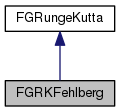
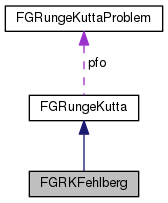
 Inheritance diagram for FGRKFehlberg: Collaboration diagram for FGRKFehlberg:
Public Member Functions | |
| double | getEpsilon () |
| int | getShrinkAvail () |
| void | setEpsilon (double e) |
| void | setShrinkAvail (int s) |
| Public Member Functions inherited from FGRungeKutta | |
| void | clearStatus () |
| double | evolve (double y_0, FGRungeKuttaProblem *pf) |
| double | getError () |
| int | getIterations () |
| int | getStatus () |
| double | getXEnd () |
| int | init (double x_start, double x_end, int intervals=4) |
| void | setTrace (bool t) |
Additional Inherited Members | |
| Public Types inherited from FGRungeKutta | |
| enum | eStates { eNoError =0, eMathError =1, eFaultyInit =2, eEvolve =4, eUnknown =8 } |
| Protected Attributes inherited from FGRungeKutta | |
| double | err |
| double | h |
| double | h05 |
| FGRungeKuttaProblem * | pfo |
Runge-Kutta-Fehlberg method.
This is a semi adaptive implementation of rkf - the interval only shrinks. As a result interval calculations remain trivial, but sometimes too many calculations are performed. Rationale: this code is not meant to be a universal pain-reliever for ode's. Rather it provides some safety if the number of intervals is set too low, or the problem function behaves a bit nasty in rare conditions.
Definition at line 164 of file FGRungeKutta.h.
 1.8.13